What should you know before trading meme coins to avoid losing your portfolio?
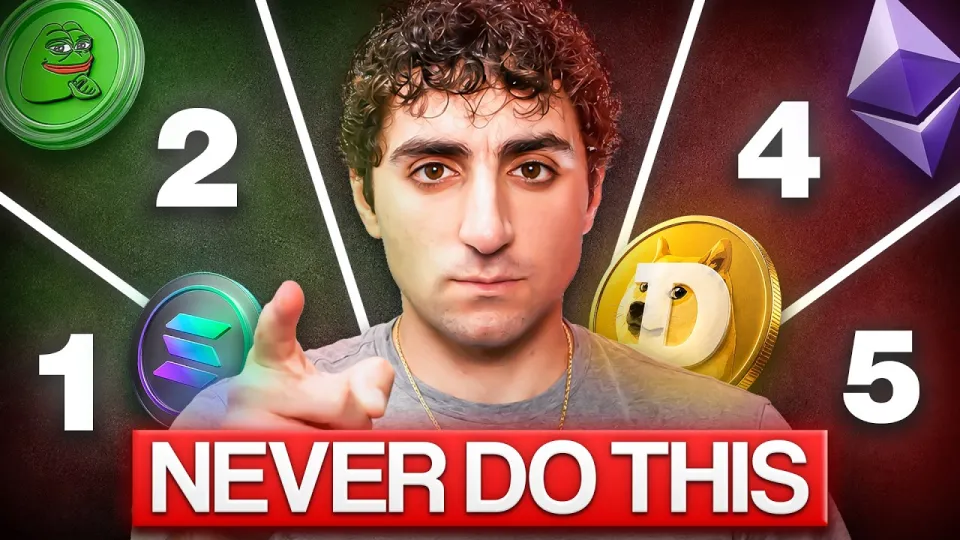
Video: 5 Things I Wish I Knew Before Trading Memecoins (Learn From My Mistakes)
Want articles like this for your own video to promote it on YouTube and Google? Order them through the Telegram bot @sat_sit_bot. It writes articles around your video, embeds the video and publishes them on popular niche websites (no ads). Try it free: 50 articles on us.
Meme coin trading is a patience and risk-management game, not a prediction game: the traders who survive treat every meme coin as a lottery ticket sized so that a total loss changes nothing, and they wait for consolidation instead of chasing pumps. Everything else — narrative, community, chart patterns — is secondary to position sizing and exits. The breakdown below follows the lessons in rasmr's video «5 Things I Wish I Knew Before Trading Memecoins (Learn From My Mistakes)», and if you want to trade alongside the same setup he uses, you can register on fomo.family via this link.
Why meme coins punish beginners more than any other crypto asset
Meme coins have no earnings, no roadmap obligations and no valuation floor, so their price is a pure function of attention and available liquidity. That makes them the fastest-moving and least forgiving segment of the market: a token can go from a few hundred thousand dollars of market cap to tens of millions and back within days. For a new trader the danger is not that the asset is risky — it is that the risk arrives faster than the decision-making. By the time a coin is trending on social feeds, the cheapest entries are already gone.
The second structural problem is dilution. Anyone can launch a token in minutes, so supply is effectively infinite and capital rotates constantly. A position that looks like an early discovery is often exit liquidity for someone who bought an hour earlier. Understanding this asymmetry — you are not early by default — is the first real step from gambling to trading.
The five mistakes that cost the most money
Most blown accounts share the same handful of errors, and none of them are about picking the wrong ticker. Ranked by damage:
- Trading out of boredom. Entering a position because nothing is happening is the single most common way to lose a portfolio, especially in a quiet or bearish market. If there is no setup, the correct action is no action.
- Oversizing. Putting 30–50% of a portfolio into one meme coin means one bad outcome ends the account. Size so that five consecutive losses are survivable.
- Chasing green candles. Buying after a 200–300% move means your entry is someone else's take-profit. The move you see is the move you missed.
- Ignoring liquidity. A token with a small liquidity pool cannot absorb your exit. Slippage on the way out can exceed the entire gain on paper.
- No exit plan. Holding for "one more leg" turns a 3x into a round trip. Decide the invalidation level and the profit-taking ladder before you click buy.
How to use consolidation as an entry signal
Consolidation is the most reliable entry zone in meme coin trading because it is where risk can be defined precisely. After a sharp move, price often ranges sideways while early buyers distribute and new buyers accumulate; a tight range with declining volatility gives you a clear level to invalidate the idea. Buying inside that range, near the lower boundary, means a stop just below the range costs you a small percentage instead of half your position.
The confirmation question is legitimate: should you buy during consolidation or wait for a catalyst? A practical compromise is to split the entry — a starter position inside the range and an add only after a break of the range high with expanding volume. News alone is a weak trigger in this niche, because by the time a headline is public the order book has already priced it.
Position sizing, liquidity and the numbers that actually matter
Risk per trade should be a fixed small percentage of the portfolio, not a feeling. A workable framework for meme coins:
- Risk no more than 1–2% of total capital per idea, and treat the full position as money you can lose entirely.
- Check pool depth before entry: if your intended size is a meaningful share of the liquidity pool, your own exit will move the price against you.
- Verify that liquidity is locked or burned and that top holders do not control a large share of supply — a single wallet dumping is a real scenario, not a theoretical one.
- Scale out in tranches (for example a third at 2x, a third at 4x, and let the rest run with a trailing stop) so that one winner pays for several losers.
- Keep a written log of entry, thesis and exit; boredom trading thrives when results are not measured.
What separates a patient trader from a compulsive one
The difference between the two is process, not talent. A patient trader has a watchlist, waits for a structure to form, sizes small and accepts that most weeks produce no trade at all. A compulsive trader refreshes charts, treats every dip as an opportunity and measures self-worth in hourly PnL. The market rewards the first behaviour and monetises the second.
One practical rule that helps: define a maximum number of trades per week in advance. Scarcity forces selectivity, and selectivity is what turns a random walk into a repeatable process. The same logic applies after a loss — a mandatory pause prevents revenge trading, which is where boredom and oversizing usually combine.
Common questions from newer traders, answered plainly
New traders tend to ask the same things in the first month: when to buy, how much, and how to tell a real move from noise. The honest answers are unglamorous. Buy in quiet ranges rather than vertical candles; size so that being wrong is boring; and treat volume and liquidity as the only signals that cannot be faked by a Telegram group.
It also helps to accept that losing trades are part of the model. A trader who wins on 30–40% of meme coin positions can still be profitable if winners are cut less aggressively than losers. What kills accounts is not the loss rate but the size of the average loss relative to the average win.
Final takeaway
The core lesson of rasmr's breakdown is that meme coin trading is a discipline problem disguised as a picking problem: patience, small size, defined exits and respect for liquidity decide the outcome far more than any single token. Treat every position as expendable, wait for consolidation instead of chasing, and let the occasional large winner carry the results. If you want to put that framework to work with the same trading setup, sign up on fomo.family through rasmr's referral link. The channel «rasmr» is worth following for more of this kind of unvarnished, mistake-driven education.
Key takeaways
- Meme coins are purely sentiment-driven assets with no cash flow, so price is set by attention and liquidity, not fundamentals.
- Most beginner losses come from boredom trading and oversizing positions rather than from picking the wrong coin.
- Waiting for consolidation and confirmed volume beats chasing a green candle that already ran 300%.
- Thin liquidity means your own sell order can crash the price — check pool depth before entering.
- A pre-defined exit plan (partial profits plus a hard invalidation level) matters more than the entry.
Source: 5 Things I Wish I Knew Before Trading Memecoins (Learn From My Mistakes) · Markdown version
Questions & answers
Should I buy a meme coin during consolidation or wait for news confirmation?
Consolidation is usually the better entry because risk can be defined with a tight invalidation level just below the range. News is a weaker trigger in this niche, since public headlines tend to arrive after the order book has already moved. A common compromise is a starter position inside the range and an add only after a breakout with expanding volume.
How much of my portfolio should go into a single meme coin?
Risk only 1–2% of total capital per idea and assume the position can go to zero. Meme coins have no valuation floor, so sizing is what keeps a bad streak survivable. If a loss would change your behaviour or your sleep, the position is too large.
Is boredom trading really that dangerous?
Yes — entering trades simply because nothing is happening is one of the most common ways accounts get wiped, particularly in quiet or bearish markets. A pre-set maximum number of trades per week and a written log make it easier to stay selective. No setup means no trade.
How do I check whether a meme coin is safe to trade?
Look at liquidity pool depth, whether liquidity is locked or burned, and how concentrated the top holders are. If your intended position size is a meaningful share of the pool, your own exit will move the price against you. None of these checks remove the risk — they only filter out the most obvious traps.